
Northern Lights in Finnish Lapland in January: Where to Go and Stay Online
eSIMtime
7 min read
0
Yes, you can see the northern lights in Finnish Lapland in January. The aurora season runs from late August to early April, and in December and January most of Lapland is in polar night, so the dark hours are long. Activity peaks nearer the equinoxes, and clear skies matter most, so plan several nights and keep mobile data ready for forecasts.
This guide covers when to look up, three practical bases (Rovaniemi, Saariselkä and Inari, and Levi or Ylläs via Kolari), how to get there, and how to stay online in the cold.
When to look for the northern lights in January
Visit Finland gives the Finnish aurora season as late August to early April, with Lapland and Arctic Lakeland as the main areas (source: Visit Finland aurora season guide).
In December and January most of Lapland enters polar night, called kaamos, and in the far north the sun does not rise at all for weeks. Visit Finland also calls this the most popular time to visit for the lights, especially around Christmas, so book trains, rooms and tours early (source: Visit Finland month-by-month aurora guide).
Auroras become more frequent the further north you go. Statistics from the Finnish Meteorological Institute say three nights out of four have northern lights in northern Lapland (the Kilpisjärvi and Utsjoki area) when the sky is clear enough, and every second night is an auroral night in Sodankylä (source: Finnish Meteorological Institute northern lights page).
Two things decide whether you actually see them. Clouds come first, because cover blocks the view entirely, so check the normal weather forecast alongside the aurora forecast (source: Visit Finland visibility tips). Timing comes second. Visit Finland puts the best window on a typical night between 9 pm and 2 am, and notes that activity can be strong in one spot and invisible a few kilometres away (source: Visit Finland aurora hunting tips). The Finnish Meteorological Institute gives a slightly shorter window of 9 pm to 1 am local time (source: Finnish Meteorological Institute northern lights page).
If your dates are flexible, February and March are worth a look too, because aurora probability climbs again as the spring equinox approaches (source: Visit Finland aurora season guide).
Three bases for aurora hunting in Finnish Lapland
Each base suits a different kind of trip. Timetables change by season, so check them before you book.
| Base | How to get there | Good for |
| Rovaniemi | Night train or flight from Helsinki | First trips, city comforts, short drives to dark skies |
| Saariselkä and Inari | Flight to Ivalo, or a bus from Rovaniemi (about 3–4 hours to Saariselkä, 5 hours to Inari) | Higher aurora frequency, fells, Sámi culture |
| Levi and Ylläs | Night train to Kolari, then a connecting bus | Combining skiing by day with aurora hunting at night |
Rovaniemi
Rovaniemi, the capital of Lapland, sits on the Arctic Circle and makes an easy base, with year-round flights and the night train from Helsinki (source: Visit Finland Rovaniemi region guide).
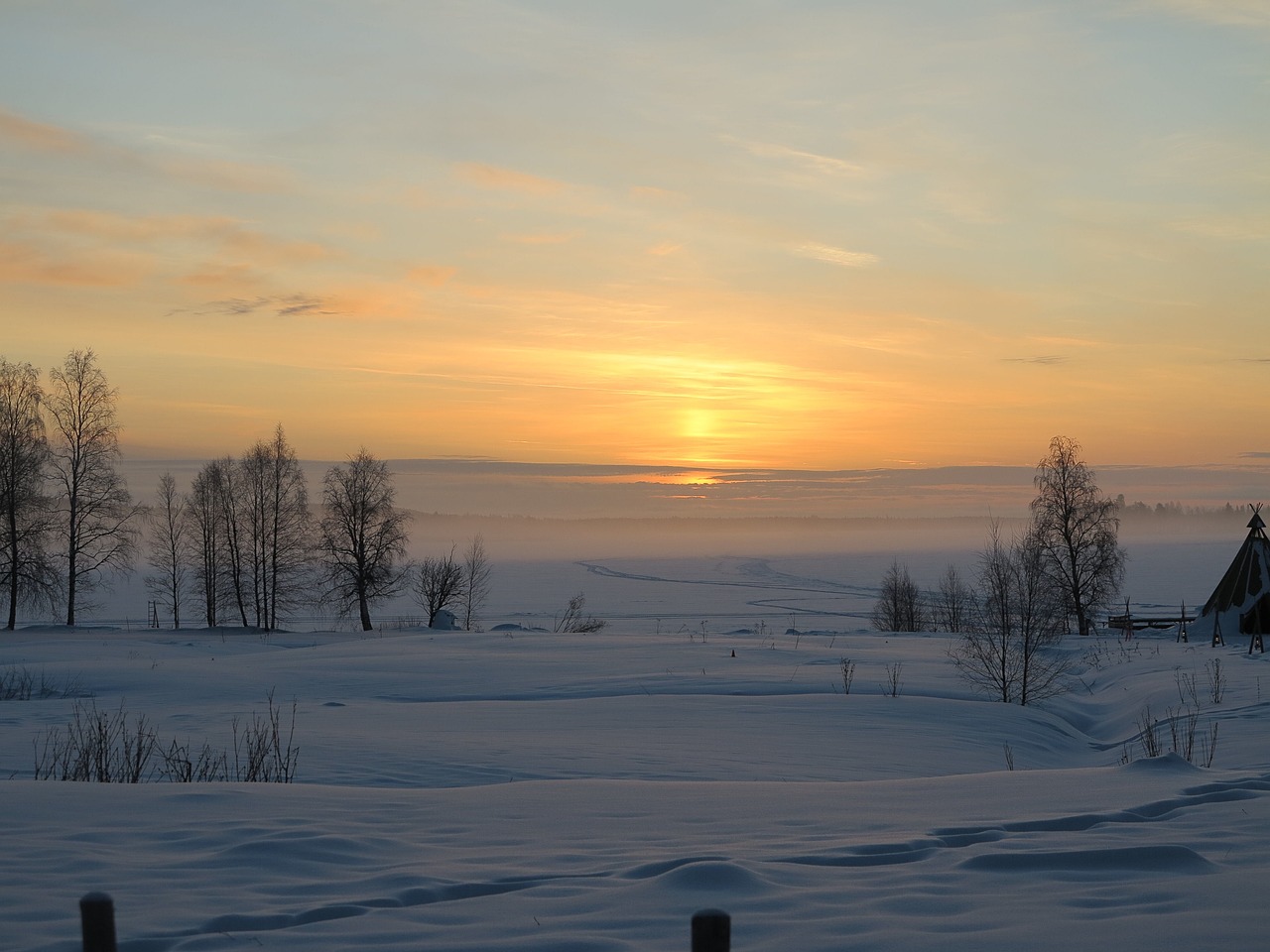
Winter sunrise at Apukka near Rovaniemi. Photo by Herrcut (Pixabay)
You do not need to go far. The local tourism board says there are viewing spots from the surrounding wilderness to places a short walk from the city centre, and the Arktikum science centre and museum has exhibitions about the science behind the lights (source: Visit Rovaniemi northern lights page). A museum visit is a useful backup plan for a cloudy evening.
Saariselkä and Inari
Saariselkä sits next to Urho Kekkonen National Park and has one of the most northerly ski resorts in Europe. The village of Inari is the centre of Sámi culture in Finland, with the Siida museum and the Sajos cultural centre (source: Visit Finland Northern Lapland guide).
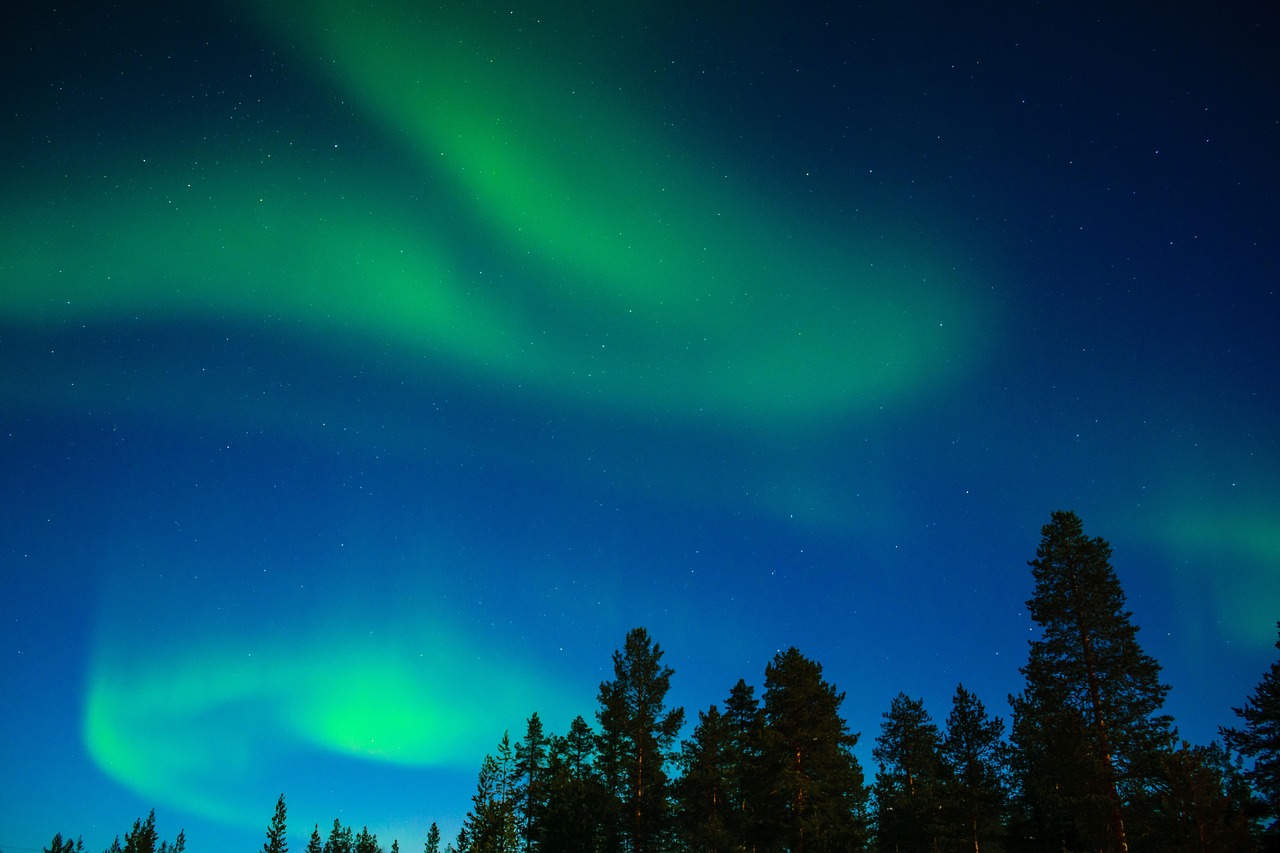
Northern lights over pine trees in the Inari area. Photo by Sturrax (Pixabay)
Finnair flies between Helsinki and Ivalo all year, with several flights a day in winter. Visit Finland also notes that winter temperatures here can drop to -40°C, and that services can be far apart (source: Visit Finland Northern Lapland guide). Pack proper layers and book your transfers in advance.
Coming overland, the connecting bus from Rovaniemi station to Saariselkä takes around 3–4 hours (source: VR Lapland train connections). The bus from Rovaniemi to Inari takes about 5 hours (source: Visit Finland Northern Lapland guide).
Levi and Ylläs via Kolari
The overnight train from Helsinki runs all the way to Kolari, the northernmost railway station in Finland (source: Visit Finland Western Lapland guide).
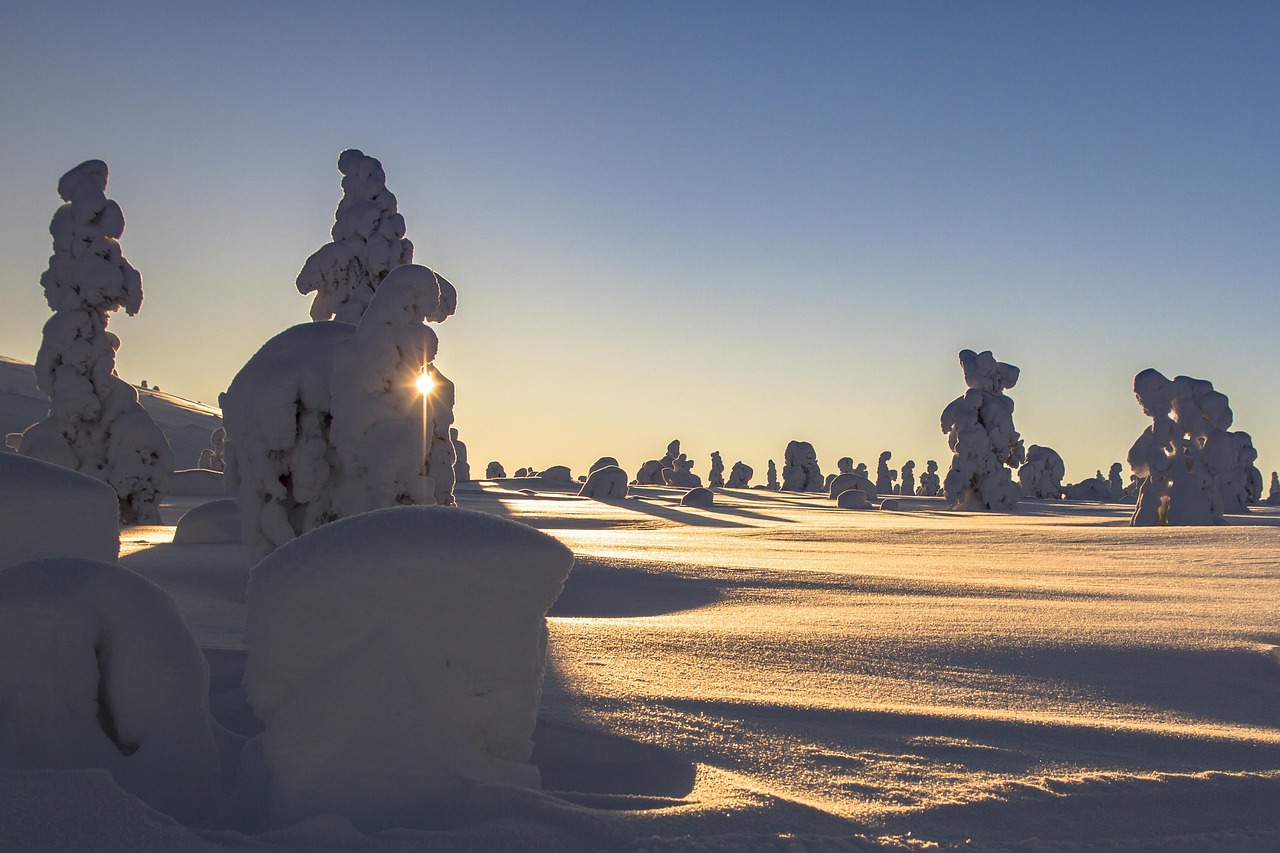
Snow-covered trees on a fell in Finnish Lapland. Photo by adege (Pixabay)
From Kolari station it is 80 km to Levi, around 1 hour 15 minutes by connecting bus, and 35 km to Ylläs, around 30–60 minutes by connecting bus. VR says you can buy the train and bus tickets in one go (source: VR Lapland train connections).
Staying connected under the Arctic sky
Aurora hunting runs on mobile data. You check cloud forecasts, the aurora probability map from the Finnish Meteorological Institute and alert apps, then decide where to drive or walk (source: Visit Finland aurora hunting tips). Add maps, tour messages and bus tickets, and data becomes part of your kit.
Coverage in Finland varies with the distance to the nearest base station, and trees, buildings and even the weather can weaken the signal. Traficom, the Finnish Transport and Communications Agency, points users to the coverage maps of the operators DNA, Elisa and Telia, which are in Finnish (source: Traficom mobile coverage page). Expect weaker signal on remote fells.
Cold is the other challenge. Apple designs iPhone for ambient temperatures between 0°C and 35°C. In very cold conditions battery life can drop temporarily and the phone may turn off, and a phone that is too cold might not charge (source: Apple guide to iPhone temperatures). Whatever phone you carry, keep it in an inside pocket and take it out only when you need it.
If your home SIM comes from another EU country or from Iceland, Liechtenstein or Norway, roam-like-at-home rules mean no extra roaming charges in Finland, although your operator may apply a fair use limit on data and a capped surcharge beyond it (source: EU mobile roaming rules). For travellers from elsewhere, roaming prices vary by carrier, and a prepaid travel eSIM with a fixed data allowance is one way to keep costs predictable.
A short checklist before your first aurora night:
- Check that your phone supports eSIM.
- Install your travel eSIM at home while you are on Wi-Fi, then switch to it when you land. When a plan starts counting its validity varies by provider, so check yours.
- Choose the eSIM as the line for mobile data and turn data roaming on for it.
- Turn the home line off, or if you keep it on for calls, turn data roaming off for the home line. Charges for calls and texts on the home line abroad vary by carrier.
- Download offline maps of your base area and save tour pickup details in advance.
- Carry a charged power bank in a warm pocket, and let a cold phone warm up before charging it.
Step-by-step help for iPhone, Samsung Galaxy and Google Pixel phones is in our activation guide, and photographers can share data with a laptop through a hotspot where the plan allows it.
- Does my phone support eSIM
- How to activate your travel eSIM when you land
- Using a travel eSIM as a hotspot
Frequently Asked Questions
Can you see the northern lights in Finland in January?
Yes. January falls inside the season that runs from late August to early April, and polar night gives long dark hours across most of Lapland. Activity peaks nearer the equinoxes, and clear skies decide each night.
What time of night is best for the aurora in Lapland?
Visit Finland suggests about 9 pm to 2 am, and the Finnish Meteorological Institute 9 pm to 1 am local time. Late evening is the core window, so keep an eye on forecasts and alerts.
Does mobile data work in remote parts of Lapland?
Coverage depends on the distance to the nearest base station, so it can be weaker in forests and on remote fells. Check the operator coverage maps and download offline maps before you head out.
Why does my phone battery die so fast in the cold?
Apple designs iPhone for 0°C to 35°C and says very cold conditions can temporarily shorten its battery life or make it turn off. Battery life returns to normal once the phone warms up, so keep it in an inside pocket.
Stay online in Lapland with eSIMtime
eSIMtime is an eSIM provider that works entirely through chat, and it has been selling eSIMs through WhatsApp and Telegram since 2024. You can buy, install and manage your eSIM by chatting with its assistant, with no website or app needed. The assistant finds the right plan for your destination and trip length, takes the payment and sends an installation link. Tapping Install now on that page starts the installation in a couple of taps with no QR code to scan, then you follow your phone's prompts to finish. If you prefer, the assistant can also give you a QR code or a manual activation code, and it answers questions or checks your remaining data 24/7.
Start a chat with the assistant:
Prefer the website? Useful pages:
- Finland eSIM plans
- Europe regional eSIM plans
- All eSIM plans
- Installation guides
- Frequently asked questions
Cover photo by Sturrax (Pixabay)